
The decision engine for every customer, every offer, every day.
The AI DecisionLayer estimates the incremental effect of every possible offer for every customer – and chooses the one that creates the most additional revenue and margin. Or decides that no offer is needed.
What makes the DecisionLayer different
1:1 decisions, not segmentation
RetailEngine analyses real customer behaviour and recommends the best action for each individual – aligned to revenue, margin or growth goals.
Central decision layer
One central AI layer connects POS and loyalty systems with AI models and delivers decisions across channels in real time.
Transparent, GDPR-compliant control
The AI forecasts the expected effect; you keep control. Decisions are adjustable, explainable and privacy-safe.
Full-assortment hyper-personalisation
Optimises across tens of thousands of SKUs – not just a handful of promotional items.
Proven impact through A/B testing
An integrated experiment platform validates every effect with control groups.
Explainable & fully traceable
For every decision you can see which offer was chosen, why, and what it delivered.
From purchase history to a personal offer
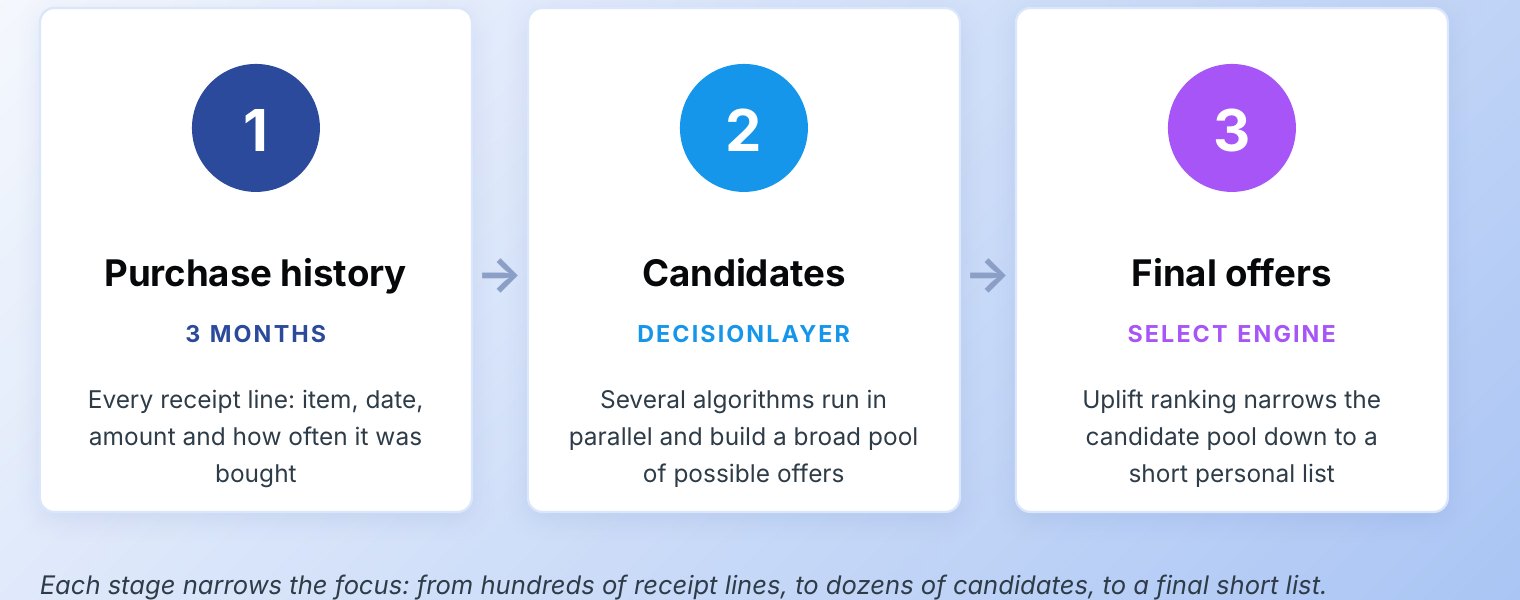
Each stage narrows the focus: from hundreds of receipt lines to dozens of candidates to a short personal list.
Many algorithms propose. One decision layer decides.
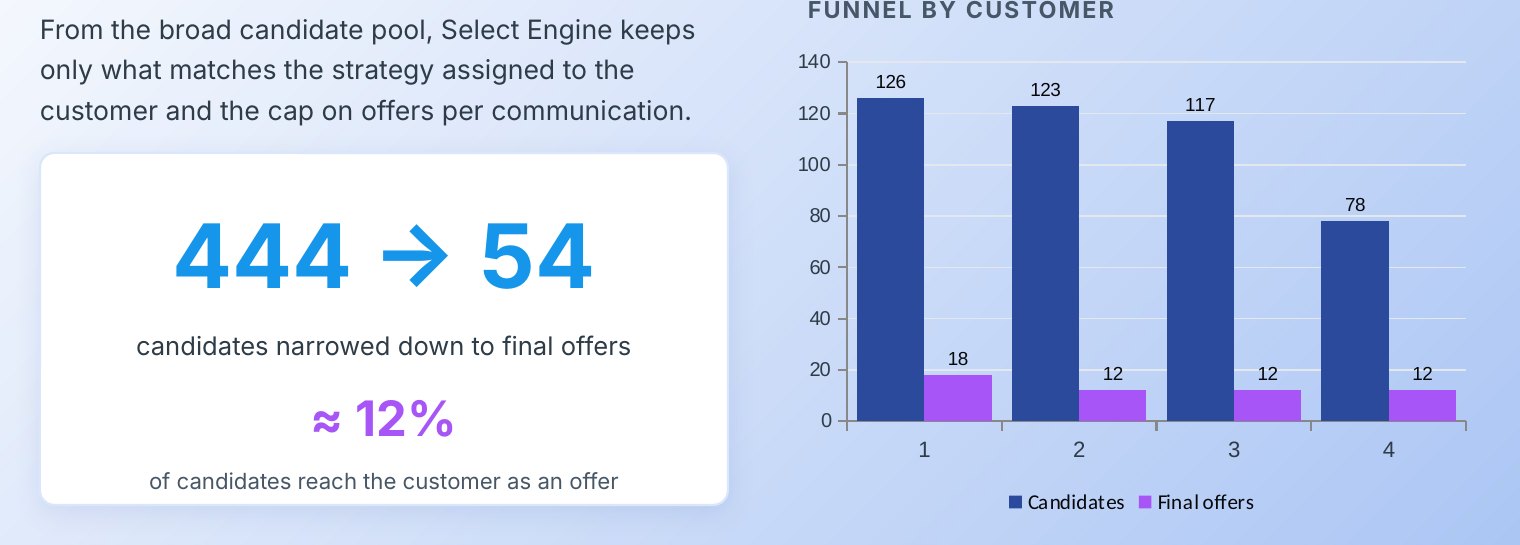
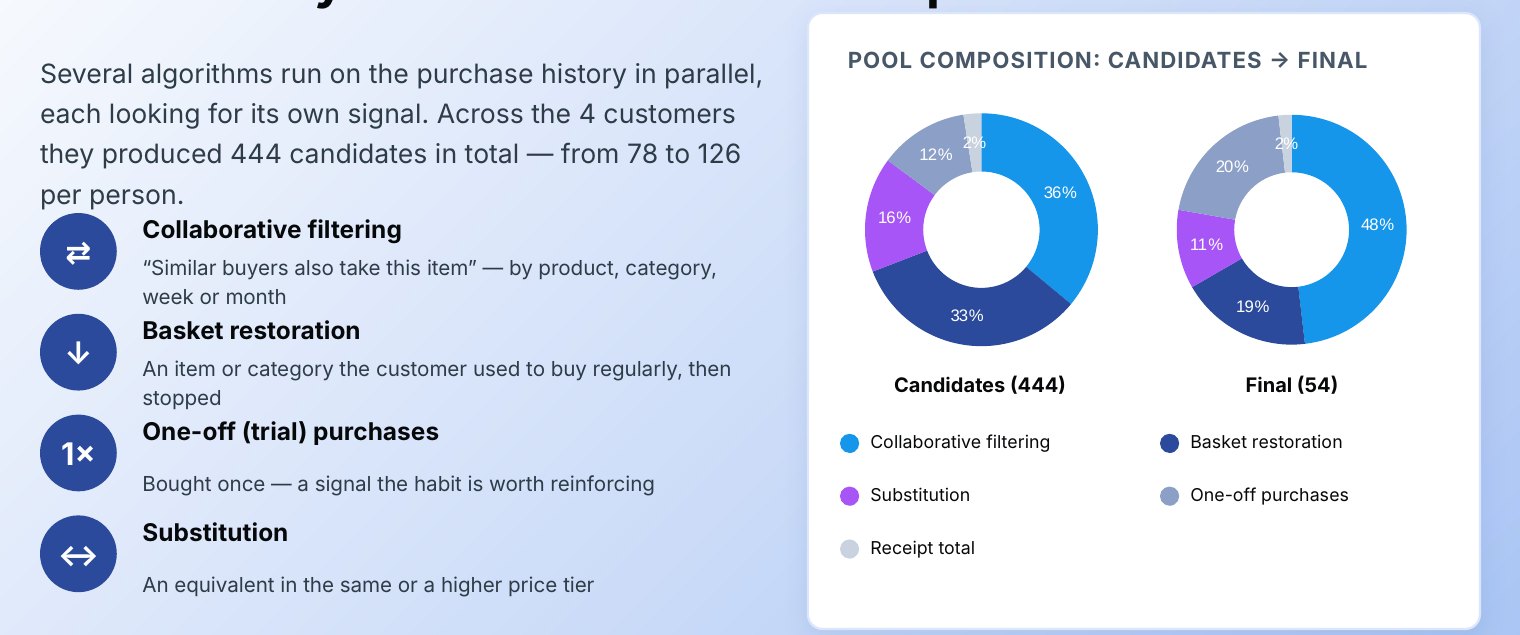
Collaborative filtering, basket restoration, one-off purchases and substitution each suggest candidates – the DecisionLayer keeps only what matches the customer’s strategy and the offer cap.
See why the AI chose this offer
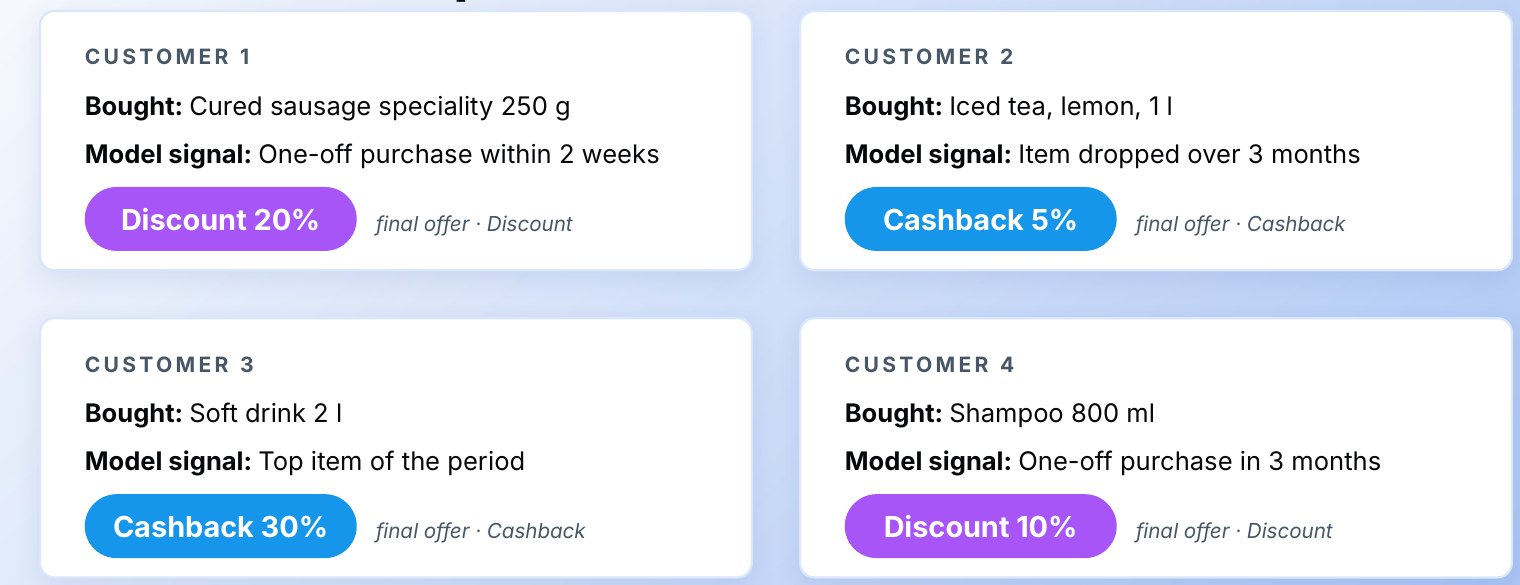
Every offer can be traced back to the receipt items and the algorithm behind it – the basis for explainable AI and for GDPR information requests.
- What the customer bought and the model signal
- Which algorithm proposed the offer
- Mechanic and discount size
- A plain-language “what-if” for every line
Personalise the incentive – not just the product
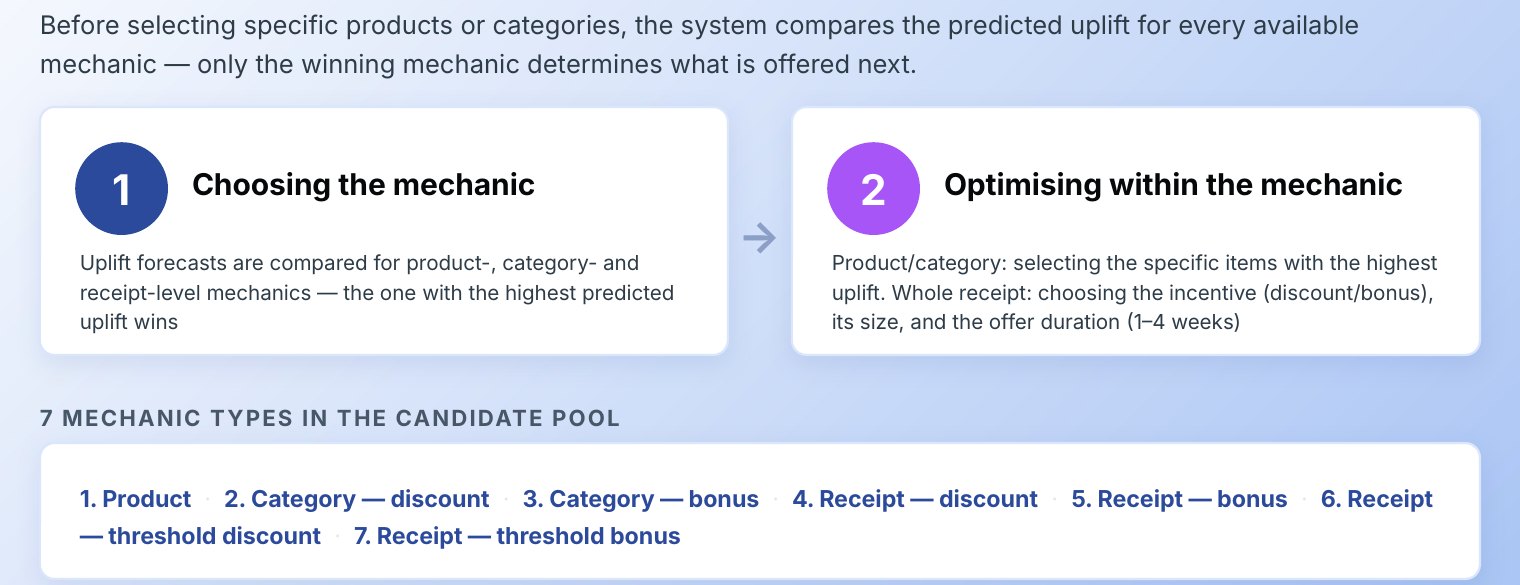
Before choosing products, the system compares the predicted uplift of every available mechanic – only the winning mechanic determines what is offered.
- Seven mechanic types: discount or bonus at product, category or receipt level, plus a threshold bonus on the receipt total
- Product, category or basket level – depending on your strategic goal
- Rules, margin targets and discount limits always enforced
Your rules. Your margins.
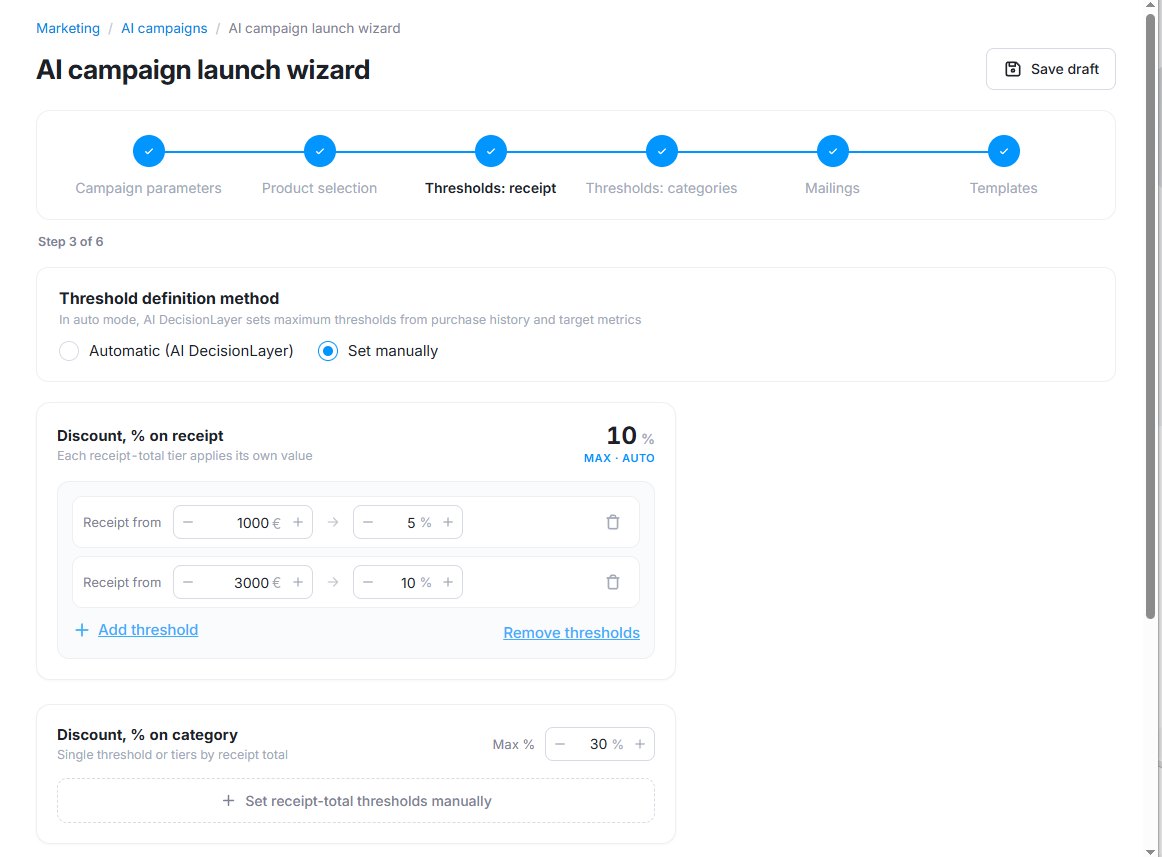
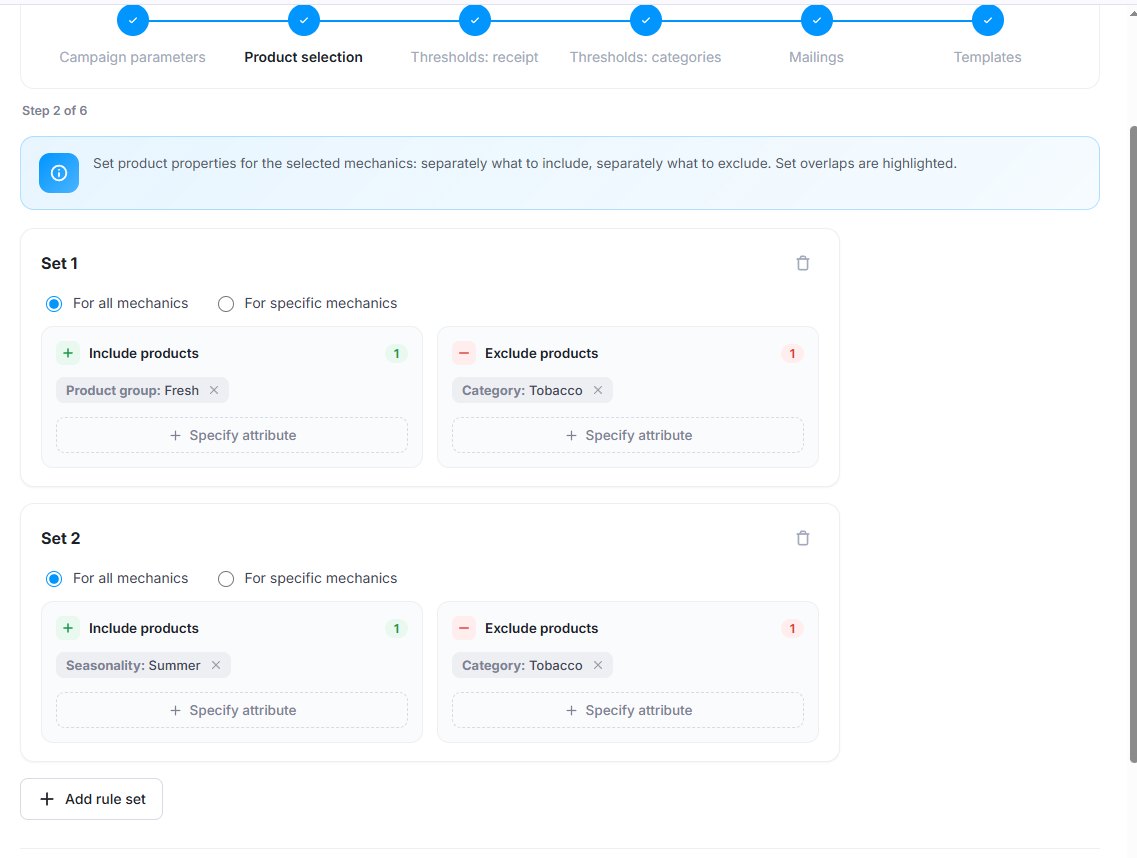
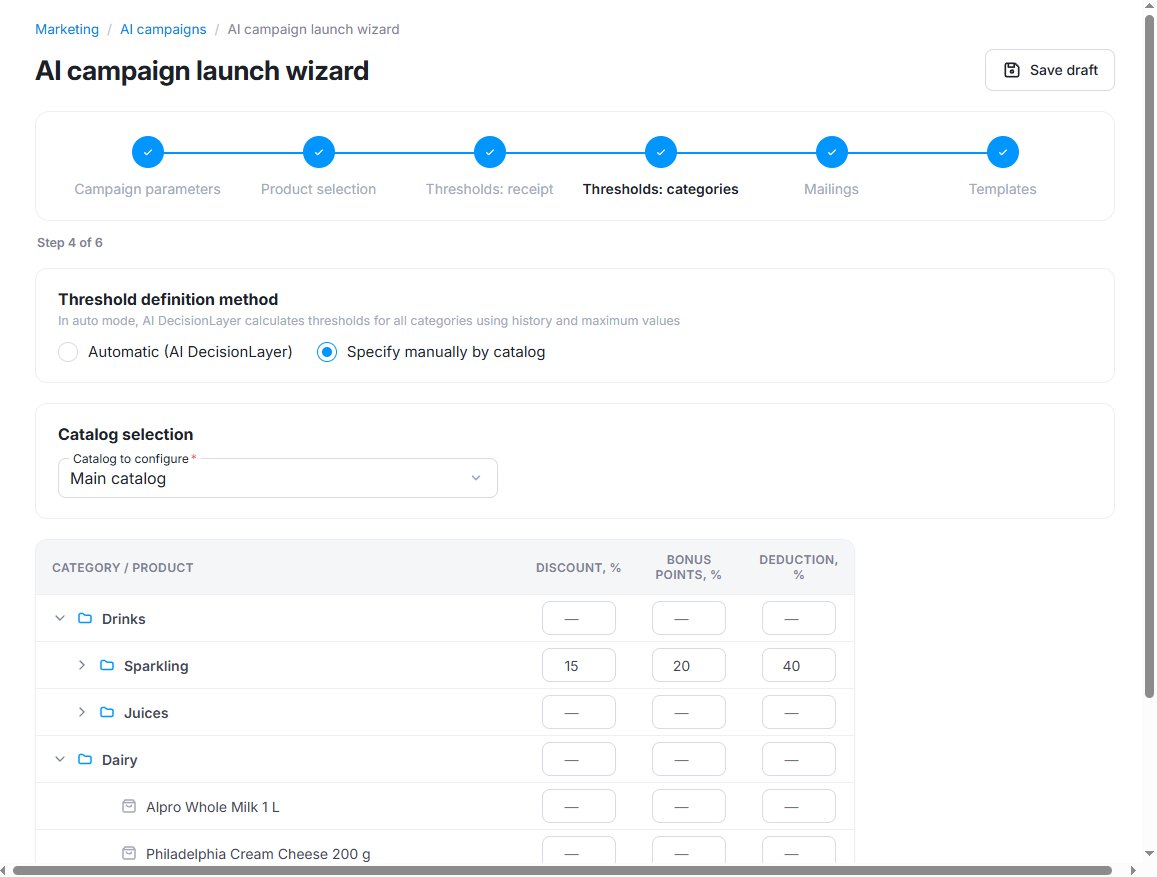
Set thresholds manually or let the DecisionLayer calculate them from purchase history and target metrics. Include or exclude product groups per mechanic.
- Receipt-total tiers with maximum discount
- Category thresholds for discount, bonus points and deduction
- Include / exclude rules, e.g. no tobacco
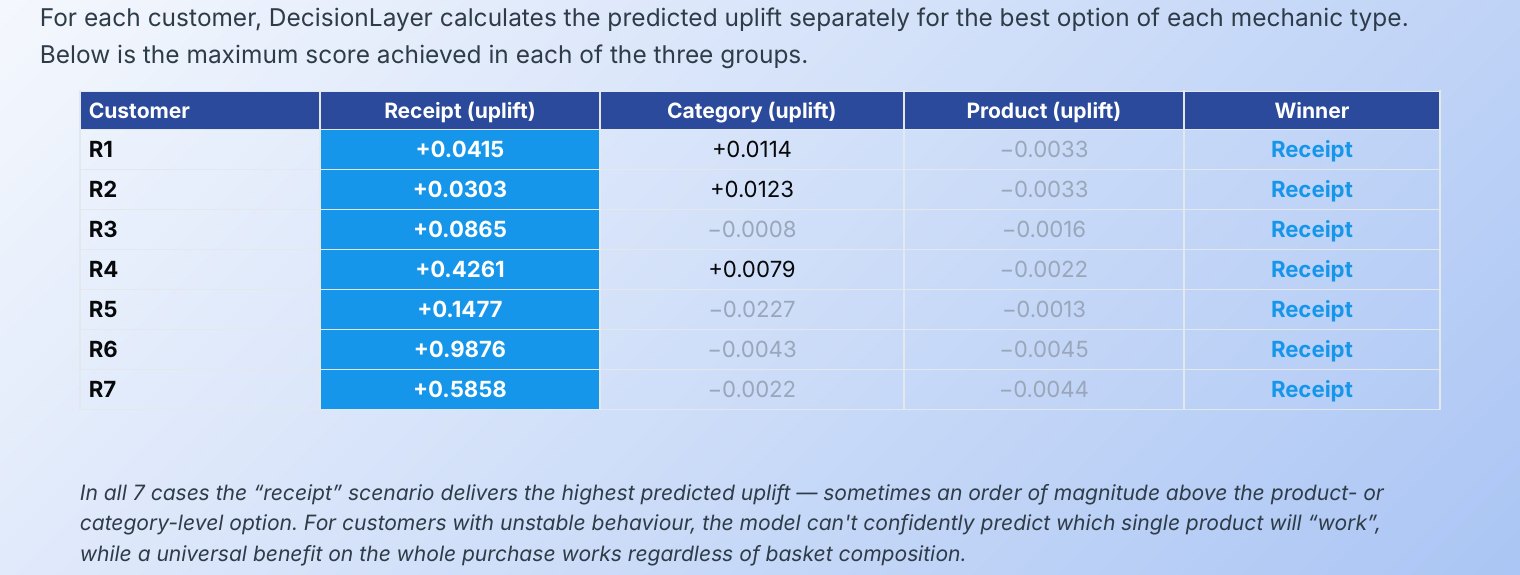
Uplift by mechanic: receipt vs. category vs. product
In this pilot example the receipt mechanic delivered the highest predicted uplift for all seven sample customers – sometimes an order of magnitude above product or category offers.
One model cannot optimise everything
Different goals need different models. All of them estimate impact – the decision is made by the DecisionLayer.
| Business goal | Model family | What it optimises |
|---|---|---|
| Incremental revenue | Uplift models | Additional basket value caused by the offer |
| Best mechanic | Multi-treatment models | Discount vs. points vs. cashback vs. threshold |
| Margin | Margin models with constraints | Profit within budget and margin targets |
| Retention | Churn and activation models | Win-back (Recovery) and retention (Hold) strategies |
| Ongoing optimisation | Contextual bandits | Learning while campaigns run |
Configure an AI campaign in six steps
The AI campaign wizard turns a business goal into a personal campaign. Fields are pre-filled with recommended values; thresholds can be calculated automatically by the DecisionLayer.
- 1 · Parameters and target metric
- 2 · Product selection rules
- 3–4 · Thresholds by receipt and category
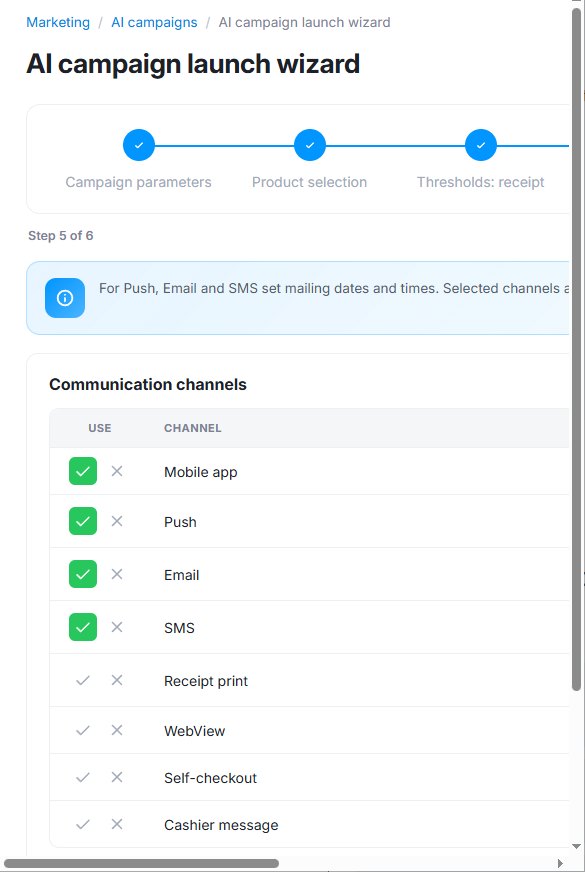
- 5 · Channels and timing
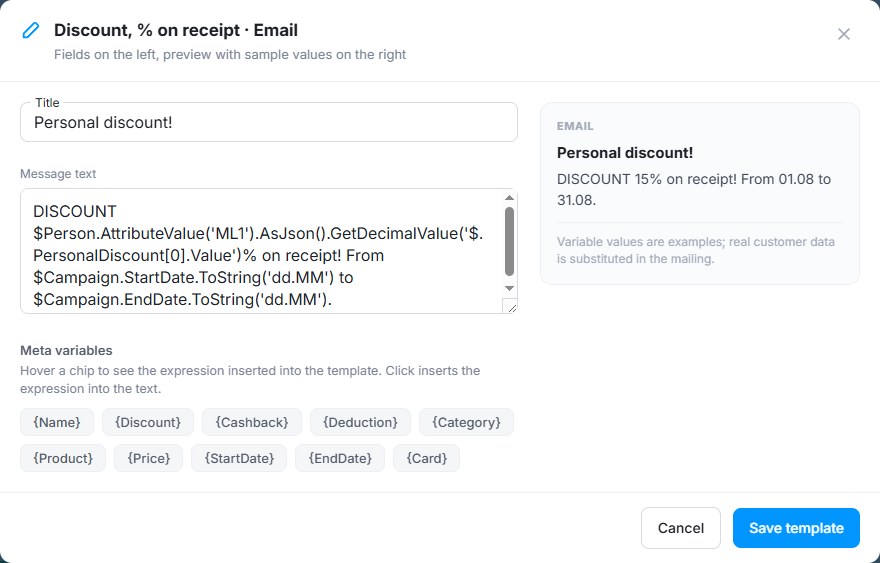
- 6 · Personalised templates
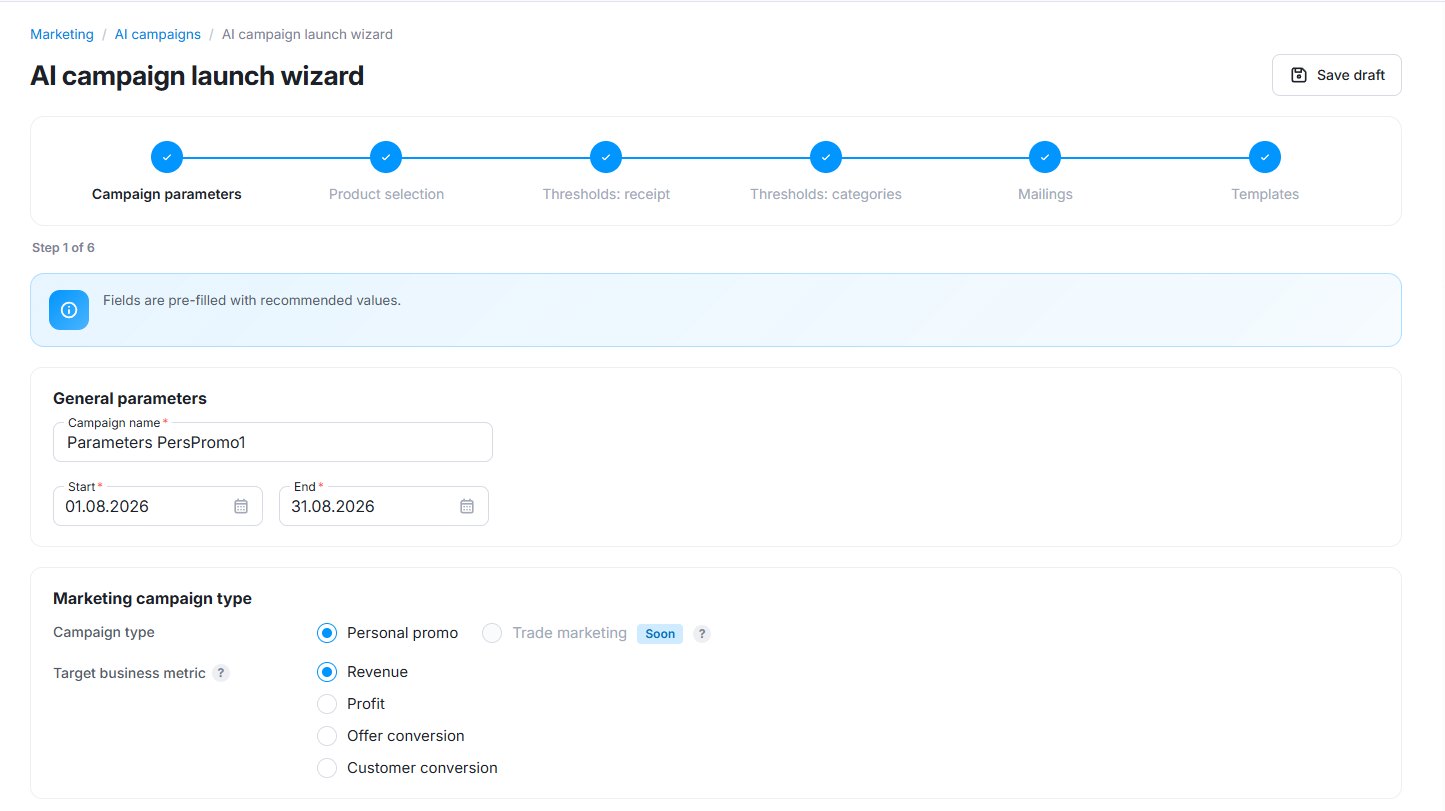
Inside the wizard
A strategy for every customer
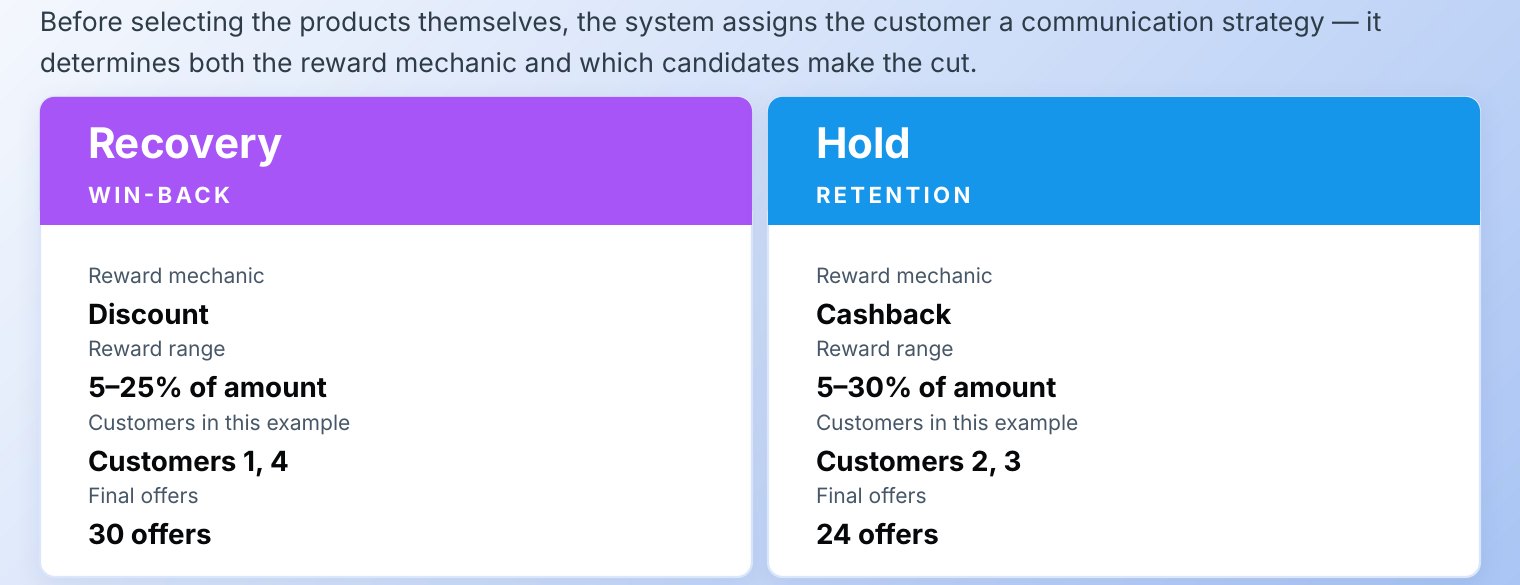
Before products are selected, each customer is assigned a communication strategy – it determines both the reward mechanic and the cap on offers.
- Recovery (win-back): discount for customers with fading activity
- Hold (retention): cashback for active customers
Know the plan before you spend
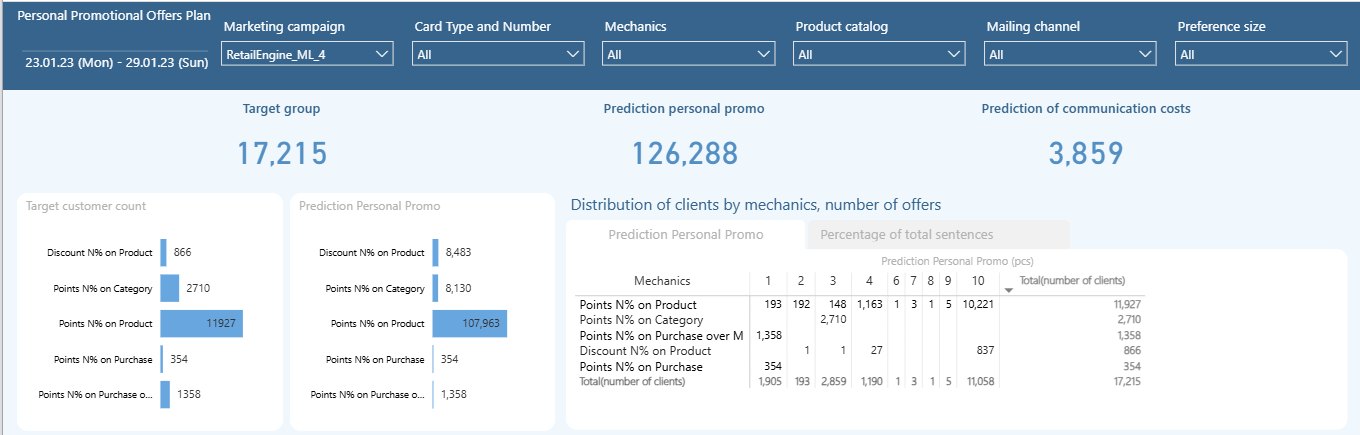
Before a campaign starts, the DecisionLayer forecasts reach, number of personal offers, distribution by mechanic and communication costs.
- Target group and number of personal offers
- Forecast of communication costs per channel
- Distribution by mechanic and discount size
AI campaign analytics
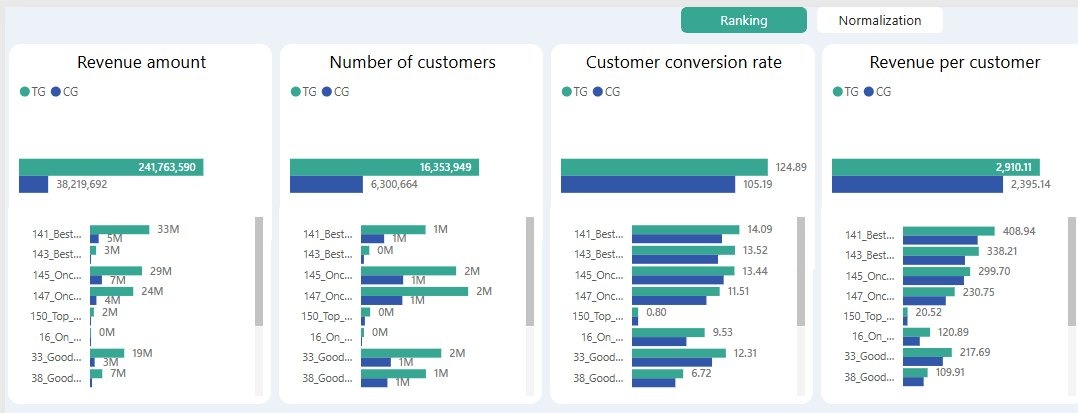
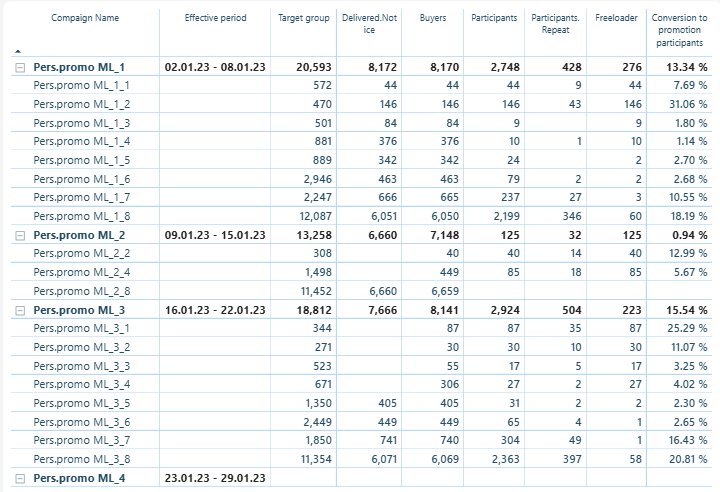
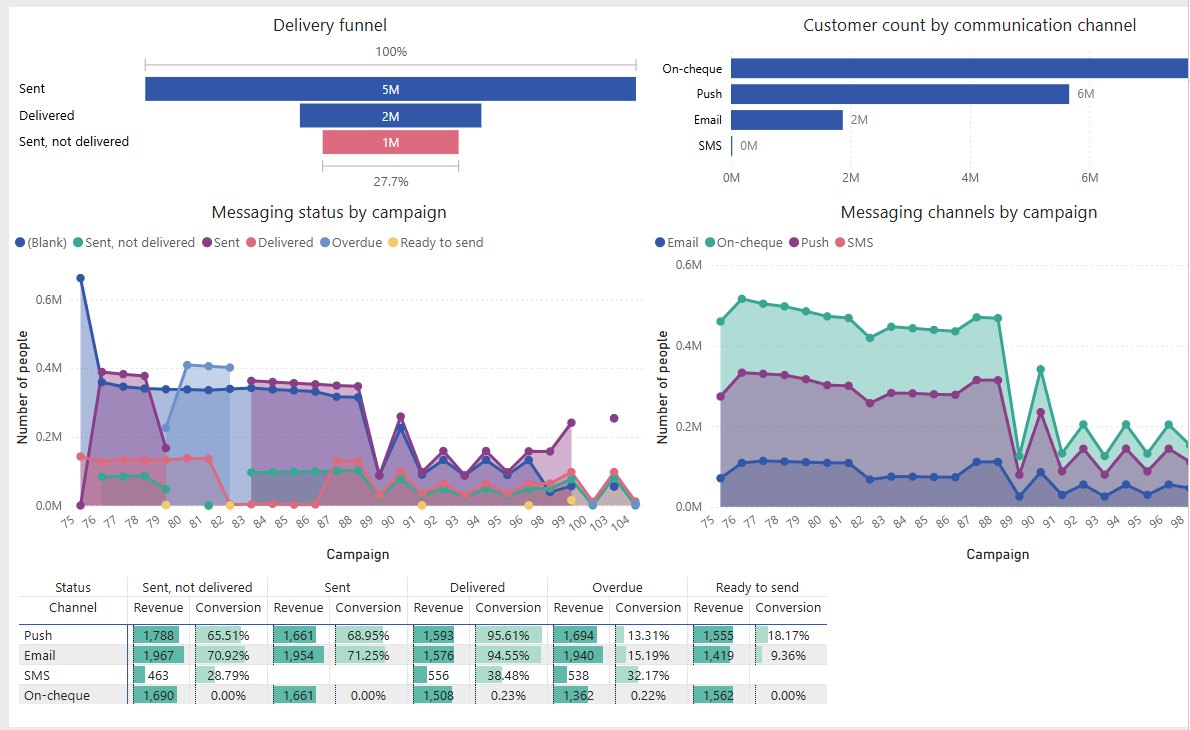
Every AI campaign is measured against its control group – revenue, customers, conversion and revenue per customer, by wave and channel.
From big data to a precise offer
Excerpt from a pilot analysis with real receipt data: four sample customers shown in detail. In a pilot, the pipeline runs across the entire customer base – the figures above refer to this sample only.
See which offer the AI picks for your customers.
We run the pipeline on a sample of your receipts and show the offers – and the uplift – in a pilot with control groups.